Gastric Dilatation-Volvulus (GDV) in Dogs
Dogs

Commonly Known as Bloat
Gastric dilatation-volvulus (GDV), often referred to as bloat, is a rapidly progressing and life-threatening condition in dogs that requires immediate emergency care. Dogs affected by GDV can deteriorate quickly, making early recognition and prompt treatment essential for survival.
GDV develops when the stomach becomes abnormally distended with gas, food, or fluid and then rotates on itself. This twisting traps stomach contents, restricts blood flow to the stomach and surrounding organs, and interferes with normal circulation throughout the body. Without urgent intervention, GDV can be fatal in a very short period of time.
Dogs at Increased Risk for GDV
While GDV can occur in dogs of any breed or size, it is most frequently seen in large and giant breeds with deep chests. Breeds commonly associated with a higher risk include Great Danes, German Shepherds, Doberman Pinschers, Standard Poodles, Weimaraners, Saint Bernards, Irish Setters, and similar body types.
Although older dogs are diagnosed more often, GDV can occur in younger dogs as well. No dog should be considered immune to this condition.
Signs and Symptoms of Bloat in Dogs
Dogs experiencing GDV often show sudden and severe clinical signs. Seek emergency veterinary care immediately if your dog displays any of the following:
Repeated attempts to vomit with little or no production
Restlessness, pacing, or signs of distress
Abdominal discomfort or a firm, distended abdomen (which may be subtle in some dogs)
Excessive drooling or foamy saliva
Rapid, shallow, or labored breathing
Elevated heart rate
Weakness, collapse, or inability to stand
Because GDV worsens quickly, even mild or early signs should be treated as an emergency.
What Causes GDV?
The exact cause of GDV remains unclear and is likely multifactorial. While body conformation plays a significant role, GDV can occur without an obvious trigger. Certain behaviors and circumstances are believed to increase the likelihood of bloat, including rapid eating, consuming large meals, or exercising too close to feeding times.
Factors Associated With Increased Risk
Large, deep-chested conformation
Eating one large meal per day
Rapid food consumption
Diets consisting primarily of dry kibble
Vigorous activity shortly before or after meals
Advancing age (most commonly middle-aged to senior dogs)
Male sex
Why GDV Is a Veterinary Emergency
As the stomach expands and twists, it places pressure on major blood vessels, reducing blood return to the heart and causing shock. The rotation also compromises blood supply to the stomach tissue itself, which can lead to tissue death. Breathing becomes difficult as the enlarged stomach presses against the diaphragm, and the spleen may become displaced or damaged.
If not treated promptly, GDV can result in life-threatening complications such as cardiac arrhythmias, sepsis, internal bleeding, and organ failure. Rapid diagnosis and immediate intervention greatly improve the chance of survival.
Diagnosis and Treatment of GDV
GDV is most commonly diagnosed using abdominal radiographs (X-rays), which allow veterinarians to assess the size and position of the stomach. Once suspected or confirmed, treatment begins right away with aggressive stabilization, including intravenous fluids, pain control, and supportive care.
Surgery is required to correct GDV. During the procedure, the stomach is repositioned and typically secured to the body wall in a surgery called a gastropexy, which helps prevent future episodes. If other organs, such as the spleen, have been affected, additional surgical treatment may be necessary.
Following surgery, dogs usually require intensive monitoring and hospitalization for several days. Even with timely treatment, complications can occur, which is why early recognition and emergency care are so critical.
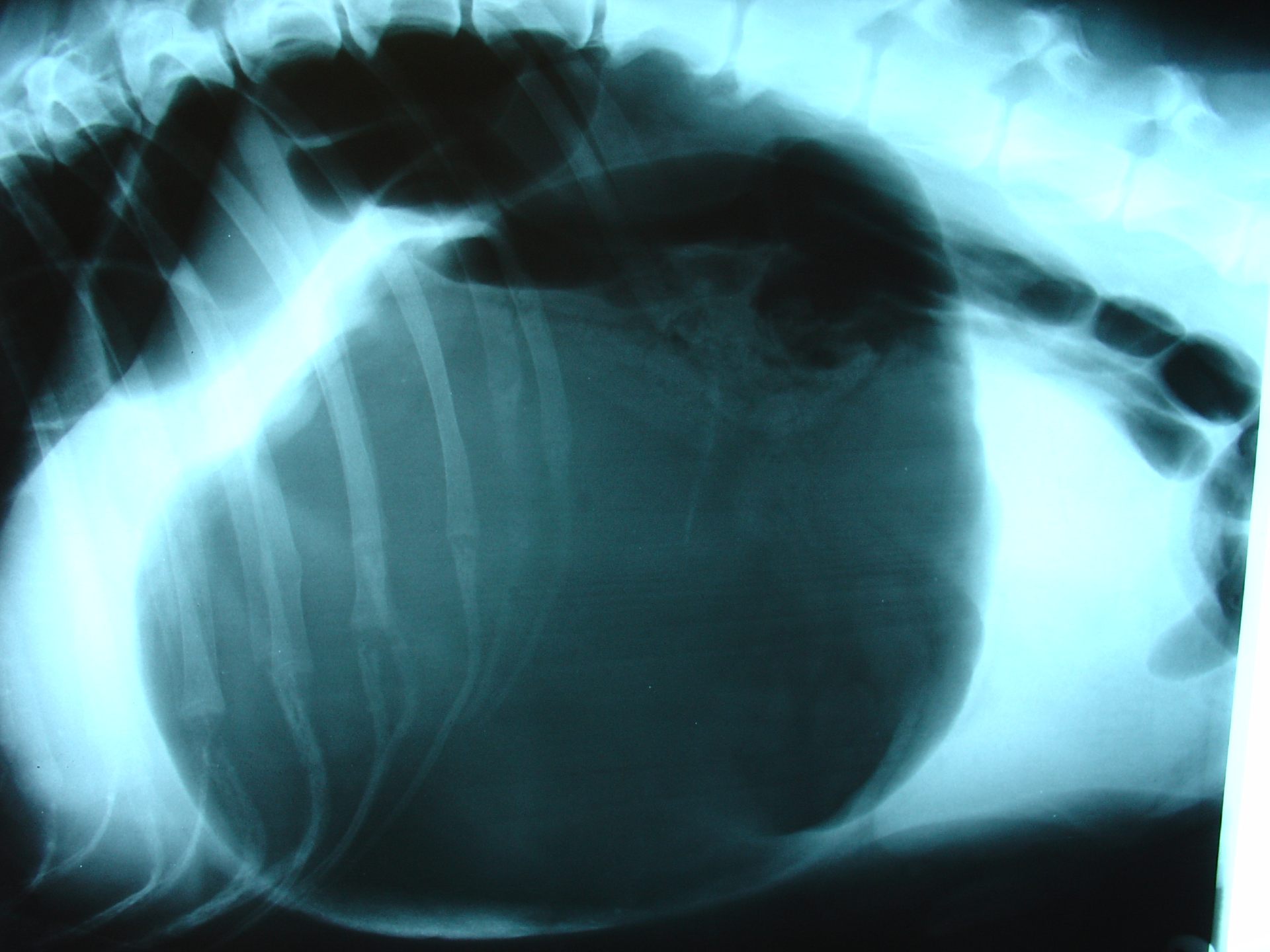
"Bloat x-ray" by Joel Mills is licensed under CC BY-SA 3.0.
Can Bloat Be Prevented?
Although GDV cannot be completely prevented, the following measures may help reduce a dog’s risk:
Feed smaller, more frequent meals
Prevent rapid eating
Limit large volumes of water intake at once
Provide rest periods before and after meals
Avoid strenuous exercise around feeding times
If your dog is considered high-risk, your veterinarian may also discuss preventative gastropexy as an option.
Emergency Care for Bloat in Wichita, KS
If your dog is showing signs of bloat, do not wait. Seek emergency veterinary care immediately.
When it comes to GDV, time is critical, and fast action can save your dog’s life.
